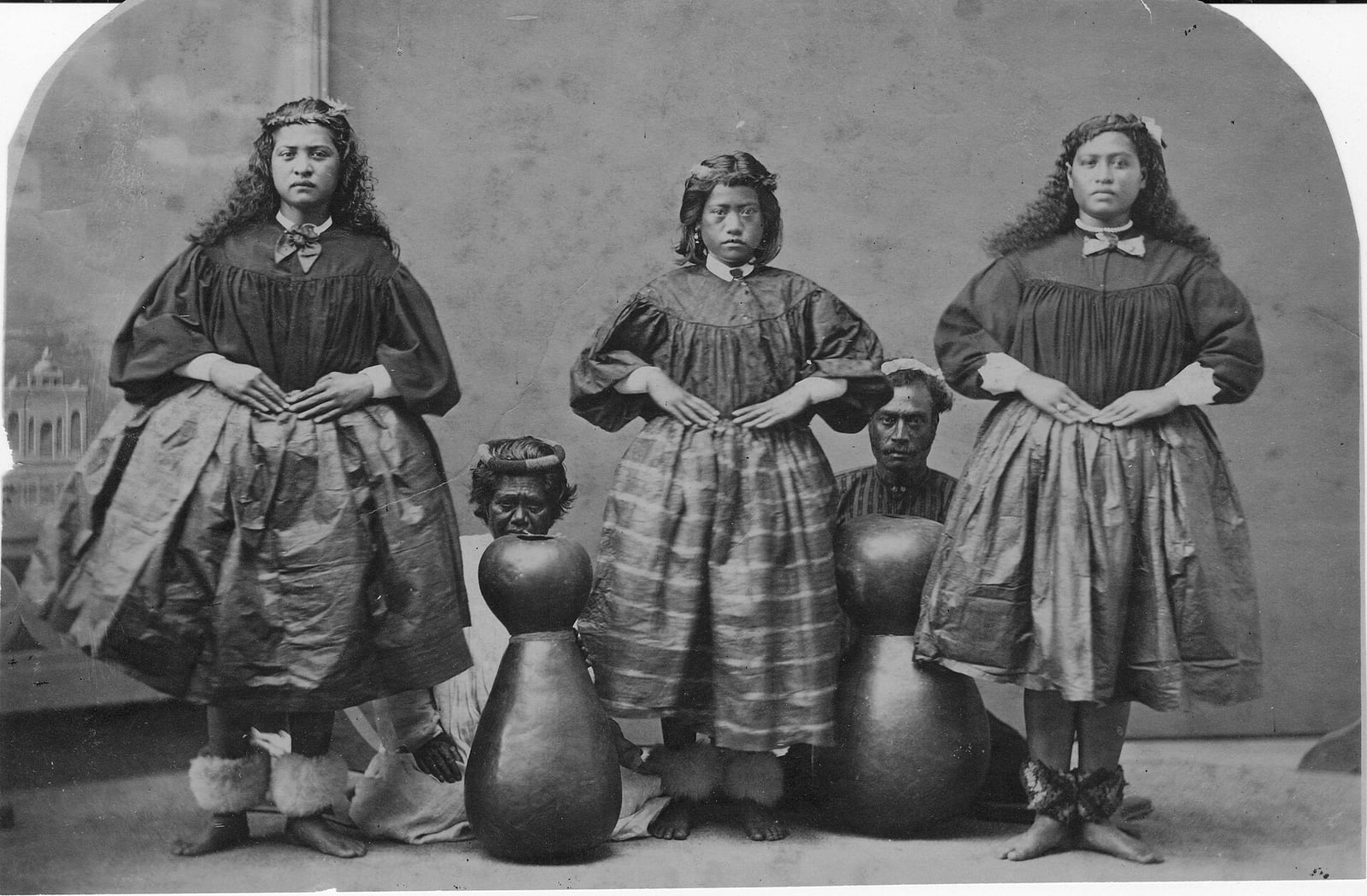
King Kalākaua Brings Hula Back to the Royal Court
Dances discouraged by missionaries returned to royal celebrations under King Kalākaua.
Hula developed in the Hawaiian Islands as a visual expression of mele, the poetic texts and chants that preserved the archipelago's history, genealogies, and religious traditions. In an oral culture where language was believed to hold spiritual power, or mana, skilled composers and chanters bore profound responsibility for their words. Movements of the hands, hips, and feet translated these oral compositions into physical form, illustrating descriptions of the natural world, ancestral lineages, or deities such as Pele and Laka. Rooted in sacred ritual, traditional performances demanded rigorous precision, as even a minor mistake was considered capable of invalidating a ceremony or bringing misfortune.
The social and religious landscape of Hawaiʻi altered fundamentally following the arrival of American Protestant missionaries in 1820. Viewing hula as an unacceptable heathen practice steeped in pagan beliefs, missionaries pressured Christianized Hawaiian rulers, or aliʻi, to suppress it. In 1830, Queen Kaʻahumanu issued an edict forbidding public hula performances. Despite this official prohibition, many Hawaiian leaders and communities continued to sponsor dancers and maintain their rituals privately. By the 1850s, the kingdom replaced outright prohibition with a system of government licensing to regulate public performances, keeping the tradition active under strict civic oversight.

Keep reading in Yester
Coming soon to the App Store
Keep following the story
Sources
Image: J. J. Williams