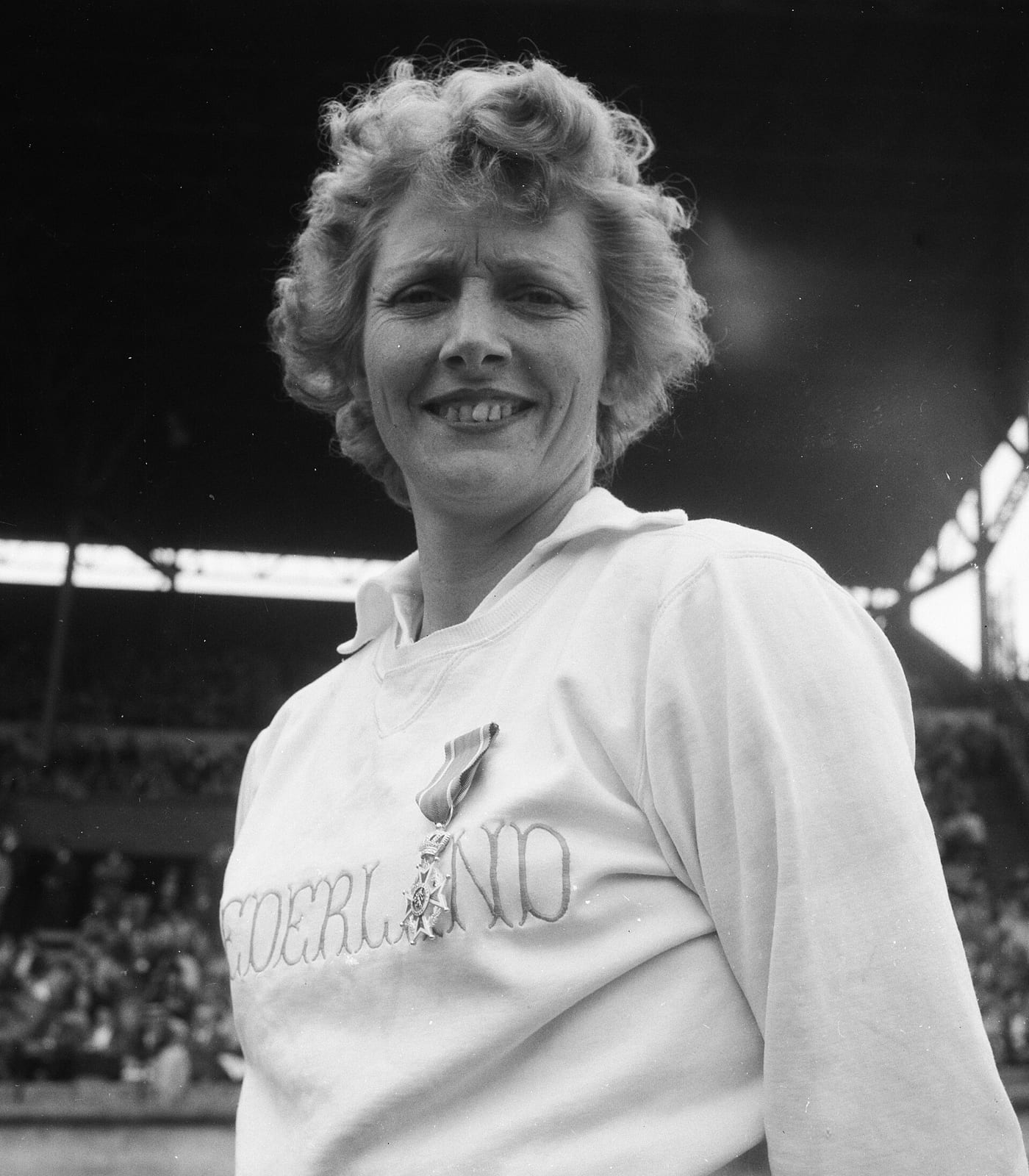
Fanny Blankers-Koen Wins Four Olympic Golds in London
At the 1948 Games, a Dutch athlete won every event she entered. Her performances challenged expectations about age, motherhood and who belonged at the center of elite sport.
When Fanny Blankers-Koen arrived in London for the 1948 Olympic Games, public commentary was dominated by skepticism regarding her eligibility to compete at the highest level. At thirty years old, she was married and had two children, circumstances that defied the prevailing conventions of mid-twentieth-century women's track and field. Contemporary sports observers, including the manager of the British team, openly questioned whether an athlete of her age could succeed. In her native Netherlands, critics publicly argued that domestic duties made elite competition inappropriate, expecting mothers to step away from international athletics.
This skepticism ignored more than a decade of international athletic development. Having entered the sport in 1935, she had reached the 1936 Berlin Games as an eighteen-year-old, placing joint sixth in the high jump and fifth in the 4 x 100-meter relay. Although the cancellation of the 1940 and 1944 Games during World War II halted global competition, she maintained rigorous training in the German-occupied Netherlands. Under difficult wartime conditions, she repeatedly altered the sport's standard marks, setting global bests across a wide array of disciplines, including the high jump, the long jump, hurdles, and sprinting.

Keep reading in Yester
Coming soon to the App Store
Keep following the story

Sources
Image: Daan Noske / Anefo