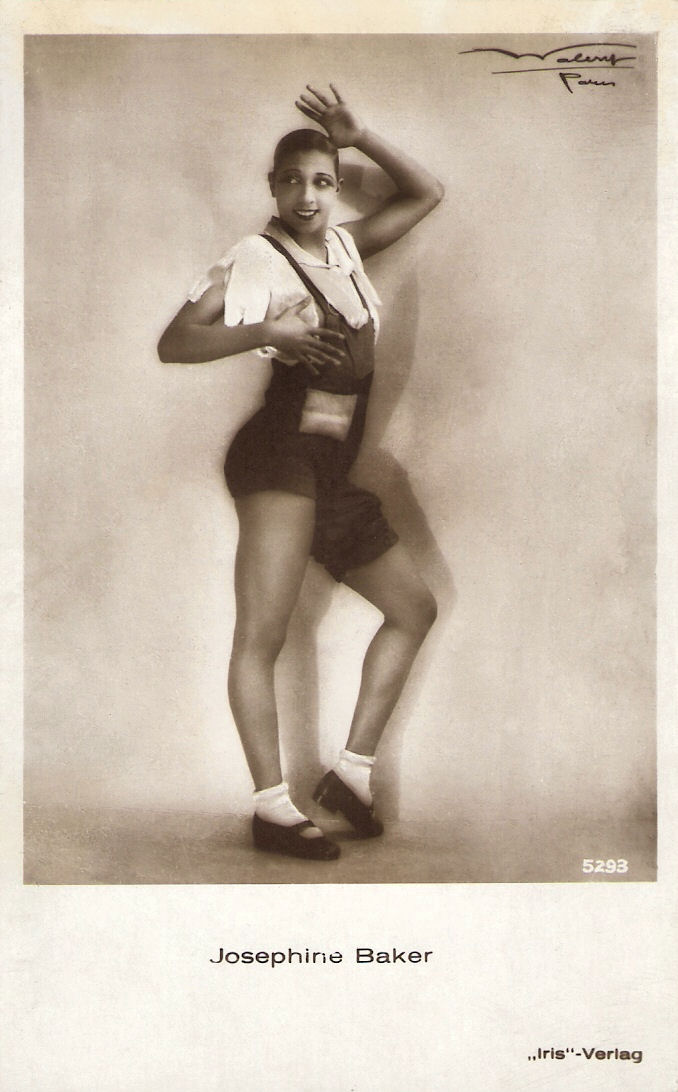
Josephine Baker Finds Fame and Contradictions in Paris
Performance opened new opportunities while racial stereotypes continued to shape the stage around her.
In October 1925, nineteen-year-old Josephine Baker stepped onto the stage of the Theatre des Champs-Elysees in Paris. Performing the Danse Sauvage in La Revue negre, she appeared minimally clothed in a feather skirt alongside dancer Joe Alex. The presentation stunned Parisian audiences and instantly propelled Baker into stardom. Her rapid ascent capitalized on a broader French cultural fascination with non-Western forms, especially African art, which was gaining momentum during the period of the 1925 Exposition des Arts Decoratifs and the emergence of Art Deco.
Baker's celebrity grew even larger when she moved to the Folies Bergere. In the 1926 revue La Folie du jour, she introduced an ensemble composed of a beaded necklace and a short skirt of artificial bananas. This look quickly became an iconic visual emblem of the era. Parisian intellectuals and artists celebrated her distinctive stage presence, bestowing titles upon her such as the Bronze Venus and the Creole Goddess. She established her own cabaret, Chez Josephine, in Montmartre, and went on to endorse branded consumer goods ranging from hair gel to cosmetics.

Keep reading in Yester
Coming soon to the App Store
Keep following the story
Sources
Image: Lucien Waléry