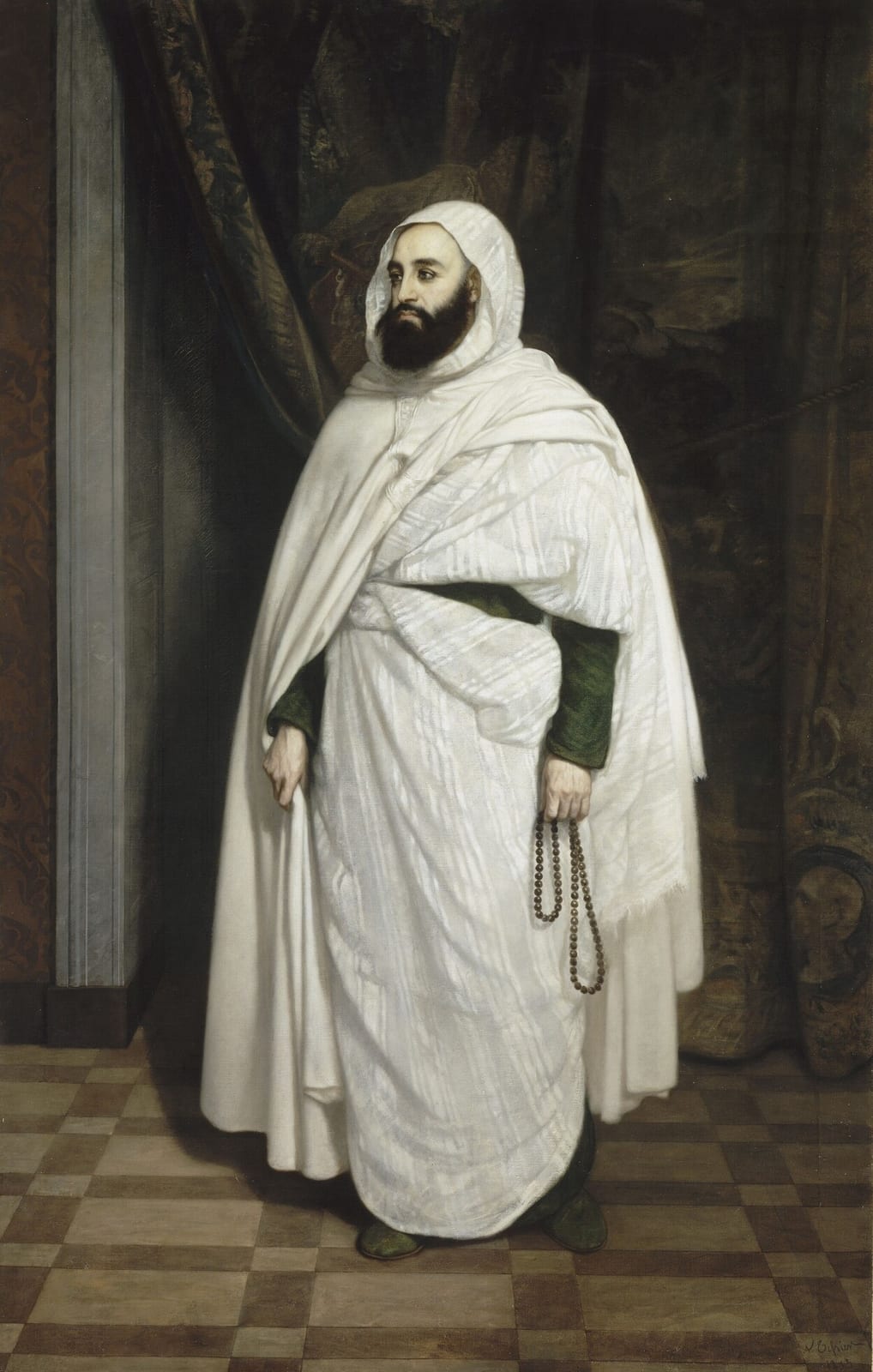
Abd el-Kader Builds Resistance and a State in Algeria
Resistance to French invasion involved political institutions and negotiations as well as campaigns.
In November 1832, representatives from the Beni Amer, Hachem, and Ghraba tribes gathered near Mascara to choose a leader for their armed resistance against the French occupation. Following the capture of Algiers in 1830 and Oran in 1831, the Western Province was fractured by internal rivalries and political breakdown. When his elderly father declined the position, Abdelkader ibn Muhyi al-Din was elected Commander of the Faithful. Only around twenty-five years of age, he was an Islamic scholar from the Qadiriyya Sufi tradition who claimed descent from the Prophet Muhammad. He quickly leveraged this authority to rally local forces, quell tribal rebellions, and establish order across the surrounding territory.
Abdelkader used both warfare and diplomacy to construct a recognized indigenous state. In 1834, he accepted the Desmichels Treaty, which conceded coastal ports to the French while securing his sovereignty over inland regions. France supplied weapons and helped train an infantry force in hopes of containing him, but Abdelkader expanded his control to Miliana and Medea. After French commanders repudiated the arrangement, his forces defeated them at the Battle of Macta in 1835. Although French armies subsequently seized Mascara and Tlemcen, shifting political priorities in Paris led to the 1837 Treaty of Tafna. This agreement expanded the territory under Abdelkader's authority across Oran Province, Titteri, and beyond without requiring him to pay tribute.

Keep reading in Yester
Coming soon to the App Store
Keep following the story
Sources
Image: Ange Tissier